

Das Internetinfoportal für Hotelsuche, Hotelzimmer, Privatzimmer und Ferienwohnungen.
Weissenkirchen in der Wachau – Das Herzstück im Donautal
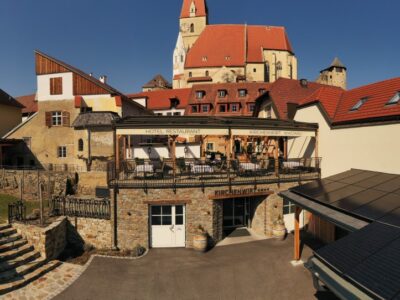
Die zweitausendjährige Geschichte hat in Weißenkirchen positive Spuren hinterlassen. imposant ist die Wehrkirche aus 1190. Sie überragt die malerischen Gäßchen milden historischen Häusern und prächtigen Lesehöfen. Romantik und Schönheit machen den Hauptort der Gemeinde zum großen Erlebnis.
Umgeben von den Ausläufern des Waldviertler Hochplateaus und dem Dunkelsteinerwald schmiegt sich die Marktgemeinde Weißenkirchen in die Donaulandschaft. Mit 500 Hektar Rebenfläche ist Weißenkirchen das Zentrum des Wachauer Weinbaues und der niederösterreichischen Weinkultur. Jung und alt finden hier alle denkbaren Möglichkeiten zur Erholung. Wer die Freizeit so richtig genießen will, ist willkommen.
Wehrkirche in Weissenkirchen
Der Ort wird dominiert von der mächtigen gotischen Wehrkirche aus dem 14. Jahrhundert., die auch namensgebend ist und deren mächtiger Turm 1531 zum Schutz gegen die Türken erbaut wurde.
Im Inneren mischen sich Spätgotik und Barock.
Sehenswert ist auch der prächtige aus der Renaissance stammende Teisenhoferhof (Fertigstellung 1542), der heute auch das Wachaumuseum, eine Außenstelle des NÖ. Landesmuseums, und das Weinbaumuseum beherbergt, sowie die an der Donau gelegenen drei Salzstadeln aus dem 17. Jahrhundert, die zu früheren Zeiten das nahegelegene nördliche Waldviertel mit dem Salz versorgt haben.
Um 830 wird das linke Donauufer von erstmals als „Wahowa“ (Wachau) bezeichnet.
Umgeben von sonnigen Rebenhügeln und eingeengt zwischen dem Silberband der Donau und grünen Wäldern erhebt sich die mächtige gotische Pfarrkirche von Weißenkirchen.
Mit den Winzerdörfern Joching, Wösendorf und St. Michael bildet Weißenkirchen den Mittelpunkt der Wachau. Weissenkirchen ist der Ort der Ursprungs Rieslingrebe.
Das kulturelle Zentrum ist der Teisenhoferhof in Weißenkirchen. Die Bewohner dieser einzigartigen Stromlandschaft sahen die Nibelungen ins ferne Hunnenland ziehen, trotzten den Anstürmen der Awaren und erlebten schließlich durch die Christianisierung bayerischer Mönche wirtschaftlich ihre erste Blüte. Lesehöfe des Bistums Passau, der Klöster Freising, Tegernsee und Niederaltaich sind heute noch Zeugen der Verbundenheit mit dem süddeutschen Raum.
Die 1.500 Bewohner leben größtenteils vom Weinbau. Kein Fabriksschlot verseucht die Luft. Eine Landschaft geprägt durch die Harmonie von Kultur und Natur, gleichsam die gelebte Poesie zwischen dem Menschen und seinem Umfeld.
Joching
Ein klassisches Winzerdörfchen mit der Ursprungsriede des Riesling.
Der mächtige Prandtauerhof mit der Sankt Magdalenskapelle und die Weinbergstraße prägen den Ort, der mit dem Namen des Weinbaupioniers Josef Jamek in Zusammenhang steht.
Weißenkirchen, Joching, Wösendorf
Wösendorf
Marktplatz, Kirche und enge romantische Gassen sowie interessante Gebinde sind die Merkmale von Wösendorf. Ehemalige Klosterhöfe zeugen von der einstigen Bedeutung dieser
Ansiedelung, die heute als beliebtes Ausflugsziel und als begehrter Heurigenort gilt.
ST. Michael
Verträumter Weiler mit nur 13 Häuser und kaum drei Dutzend Bewohnern, aber von größter geschichtlicher Bedeutung. Ab 987 war St. Michael die einzige Pfarre weit und breit. Von hier aus wurden die Menschen der Wachau und des südlichen Waldviertels lange Zeit seelsorglich betreut. In der Katastralgemeinde St. Michael, befindet sich die gleichnamige Wehrkirche aus der Zeit um 1500.Die Pfarre St. Michael ist noch 500 Jahre älter und gilt als älteste Pfarre der Wachau.